Here’s the uncomfortable truth for anyone who manages a marketing budget. The best predictor of attendance I’ve ever seen has nothing to do with how much you spend.
It’s word of mouth. Are people telling their mates they’re going. Are your exhibitors telling their own customers to come find them on the floor.
Think about the maths for a second. If every exhibitor at your event told their own customer base to come along, you’d have access to the combined audience of every single exhibitor in the building. Not your list. Theirs, multiplied. That’s a bigger audience than any campaign budget will ever buy you.
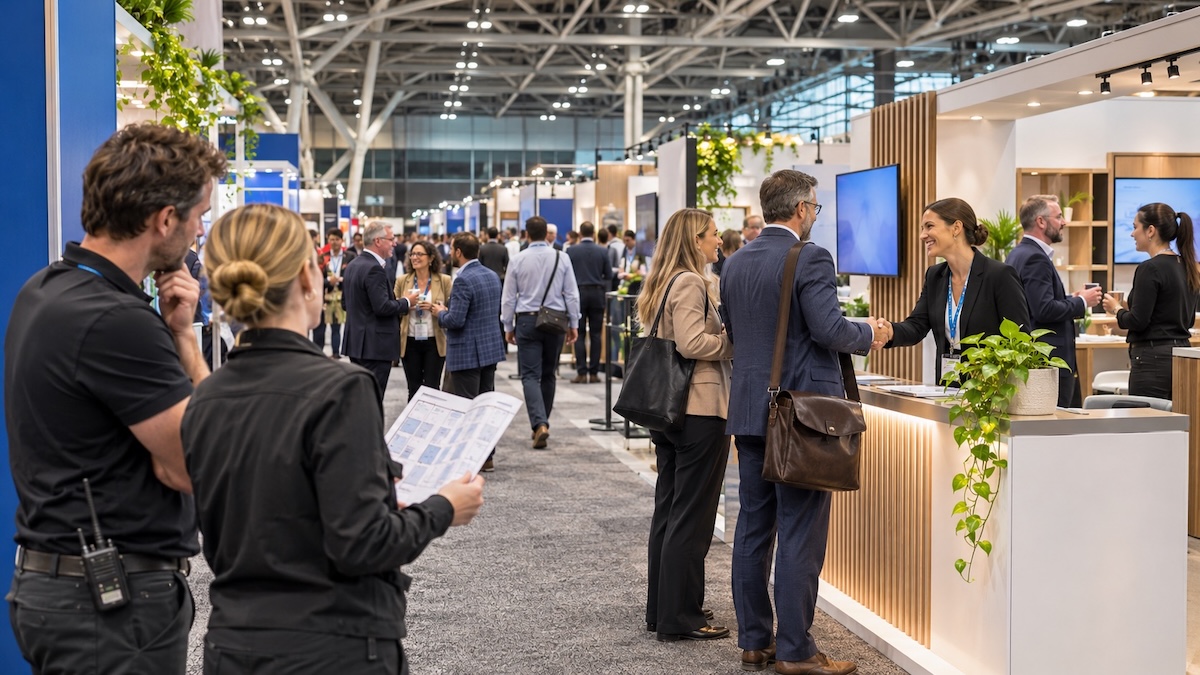
I’ve seen shows where the biggest attendance spike had nothing to do with the ad spend, and everything to do with exhibitors who felt genuinely proud to invite their own people. That pride isn’t something you can buy. You have to earn it.
So here’s my real question for you. If your exhibitors aren’t inviting their own customers to your show, is that a marketing problem, or is it telling you something about the experience you’re actually delivering.
We’re not judged by the mistakes. We’re judged by how we handle them.
Something’s going to go wrong on your event. Every time, in some form. A severe weather warning rolls in the night before doors open. A vendor doesn’t show. A floor plan needs to change three hours before load-in finishes. No amount of planning removes that risk entirely.
What separates a good operator from a great one isn’t a mistake-free show. It’s what happens in the ninety seconds after something breaks. Do you panic, or do you think. Does your team lose confidence, or do they look at you and relax a little because you clearly haven’t lost yours.
But here’s the thing, that calm doesn’t just come from experience. It comes from how you’ve led your team long before the crisis ever showed up. If the only person on-site who can make a decision is you, you’ve built a bottleneck, not a team. The operators I respect most spend their energy mentoring people well in advance, giving them the training, the context, and the trust to make good calls themselves under pressure.
Empowered teams don’t wait for permission when something goes wrong. They’ve already been given the tools and the confidence to act. That’s not luck. That’s leadership done properly, months before the show ever opens its doors.
I’ve seen a severe weather event force a full site shutdown less than twenty four hours before opening. We still opened on time, within minutes of schedule, because the team on the ground already knew how to think, not just what to do.
How do you build that kind of confidence in your own team before the pressure hits?
“Don’t fall in love with the act” one of my wise (I better not call him “old”) mentors told me years ago. It took me a long time to really understand it.
I believe my passion for whatever I turn my hand to, is one of my genuine strengths. I think the many people I’ve worked with over the years would back me up on that. It’s the X-factor; thing that makes an event feel alive instead of just delivered. So my mentor’s lesson wasn’t an argument against passion.
It was about something more specific: the moment love for a particular event quietly changes the standard you hold it to.
I once built an event from nothing more than an idea. It was well loved by attendees, exhibitors, sponsors, even suppliers! It won awards domestically and was nominated internationally. I held that event to a slightly different standard than I had held every other show I ever ran. Not looser, just a frame of reference. Instead of asking “does this pay for itself,” I’d ask, “does this make the experience better,” and let that be the answer on its own.
Most of the time, that instinct paid off.
Later, I went on to build something similar, what I thought would be my magnum opus, in a much harder climate. A new business, mid-pandemic, when lockdowns could be announced overnight and nobody, exhibitors or visitors, knew if the show would even be allowed to open. I kept building toward the vision I believed in, certain that if we could just deliver it, it would set a new standard.
But you can’t out-build uncertainty. Exhibitors and hesitated. Visitors hesitated. Not because the vision was wrong, but because nobody could get comfortable committing when the ground itself kept shifting. The revenue that vision depended on never fully arrived, because the environment around it never gave anyone the confidence to commit.
Unlike the saying, the show did not go on.
It was a hard lesson to learn, but I don’t think I could have learned it any other way than through lived experience. I brought every bit of knowledge and experience I had to that event, I zigged and I zagged, but I’d never faced those particular conditions before, and no amount of experience elsewhere prepares you for a first encounter with something like that.
I’m not really sure if the outcome would have been dramatically different had I been more pragmatic, but perhaps that show could have gone on. Which is the whole point of my mentor’s advice. Falling in love with the act doesn’t always sink you. But it can quietly cost you, in ways you often only see looking back.
Where’s the line for you, between backing your vision and holding it to the same scrutiny as everything else you build?
Paul Mathers
Paul is a highly experienced commercial event executive with more than 30 years’ experience building, launching and growing successful consumer event brands across Australia, the United States, United Kingdom and Southeast Asia. His career spans business leadership, P&L accountability, strategic partnerships, sponsorship, revenue growth, brand development and team leadership. Paul has led multidisciplinary teams across sales, marketing, operations and event delivery, while developing commercially successful events in the automotive, lifestyle and pet sectors.
His achievements include leading some of Australia’s foremost consumer events, delivering multiple EEAA Award-winning exhibitions and building internationally recognised brands in highly competitive and diverse markets globally. Connect with Paul through LinkedIn HERE